China Best Coating Machine Manufacturers for Global Buyers
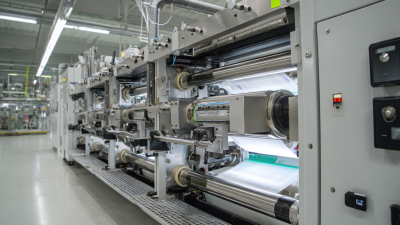
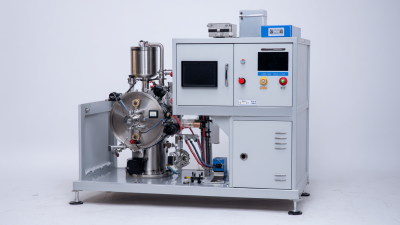
Choosing among China’s best coating machine manufacturers requires more than comparing prices or polished product photographs. Global buyers need evidence of engineering experience, stable production, and dependable after-sales support. A qualified supplier should explain how its Coating Machine handles substrate width, coating viscosity, drying temperature, line speed, and permitted material types. Clear answers matter.
Factory visits, video inspections, and documented testing can reveal practical details. Look for clean assembly areas, calibrated instruments, organized spare-parts storage, and operators who understand process control. Ask for factory acceptance testing records, sample coating results, installation references, and maintenance schedules. A machine may look impressive while producing uneven edges or unstable thickness. Small defects become expensive after shipment.
Reliable manufacturers also discuss compliance without making vague promises. Buyers should verify electrical requirements, guarding, emergency stops, documentation, and applicable destination-market standards with qualified professionals. Warranty terms should define response times, replacement parts, remote support, and commissioning responsibilities. Total cost includes training, energy use, freight, tooling, and future upgrades.
No supplier is perfect. That matters.
Some published specifications may need independent confirmation. A careful sourcing process compares real samples, not only brochures. It also records questions, test conditions, and agreed performance limits before signing a contract. This approach helps global buyers identify China-based partners with credible expertise, practical transparency, and equipment suited to long-term production rather than short-term appearance.
China’s Coating Machine Market: 2024 Capacity, Exports, and Buyer Demand
China Best Coating Machine Manufacturers for Global Buyers
China’s Coating Machine Market: 2024 Capacity, Exports, and Buyer Demand
China’s coating machine market expanded in 2024 through strong industrial capacity and flexible production networks. Manufacturers supplied equipment for packaging, electronics, construction materials, textiles, and battery components. Major production areas combined machining workshops, automation suppliers, and experienced commissioning teams. This structure helped shorten delivery times for customized coating lines.
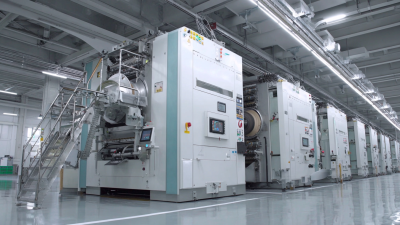
Capacity alone can mislead. A factory may list several production lines, yet its real output depends on engineering staff, testing space, and component availability. Buyer audits should examine recent shipments, factory acceptance records, and service response times. Small details matter. Ask to inspect coating uniformity, web tension control, drying performance, and cleaning access.
Export demand remained practical rather than purely price-driven. Buyers in Southeast Asia, the Middle East, Europe, and Latin America increasingly requested energy-saving dryers, remote diagnostics, safer guarding, and documentation for local compliance. Many also needed machines adapted to different widths, viscosities, substrates, and working environments. Experienced exporters usually provide installation guidance, spare-parts lists, and operator training. Still, communication can fail when technical terms are translated loosely. Clear drawings and sample materials reduce that risk.
Some purchasing teams focus heavily on initial cost. That can be a mistake. Electricity use, changeover time, coating waste, and maintenance access often shape the machine’s five-year value. China remains a competitive sourcing base, but buyers should verify performance through trials instead of relying only on brochures or capacity claims.
China’s Coating Machine Market: 2024 Capacity, Exports, and Buyer Demand
China market indicators relevant to coating-machine manufacturing and purchasing activity, measured by year-on-year growth in 2024.
Manufacturing investment rose by 9.2%, indicating continued capacity expansion. Equipment-manufacturing investment increased by 15.7%, serving as a buyer-demand proxy for industrial equipment such as coating systems. China’s goods exports grew by 7.1% in renminbi terms, supporting a positive export environment for machinery suppliers. These are official sector-level indicators and do not represent any individual company or brand.
Sources: National Bureau of Statistics of China, 2024 national economic and social development data; General Administration of Customs of China, 2024 trade statistics.
Coating Machine Types: Roll, Slot-Die, Spray, and Powder Systems
China Best Coating Machine Manufacturers for Global Buyers
Coating Machine Types: Roll, Slot-Die, Spray, and Powder Systems
Choosing the best coating machine depends on the substrate, coating viscosity, line speed, and final thickness. Roll coaters suit films, metal sheets, and paper webs. They provide stable coverage at high speed, but excessive pressure can create streaks or edge buildup. Slot-die systems deliver a controlled liquid curtain onto moving material. They are effective for battery films, optical layers, and adhesive coatings, especially when thickness uniformity matters. According to a 2024 Smithers market analysis, demand for functional and barrier coatings continues to grow with flexible packaging and electronics. Small process errors become visible quickly.
Spray systems remain practical for three-dimensional parts, complex surfaces, and products requiring adjustable coverage. Operators must control nozzle distance, atomization pressure, and booth airflow. Powder coating systems use electrostatic charging, curing ovens, and recovery units. Grand View Research estimated the global powder coatings market at about USD 15.6 billion in 2023, with continued growth expected through 2030. That trend supports investment in efficient powder application, but oven energy use still deserves careful calculation.
Experienced Chinese manufacturers can customize web widths, drying sections, pumps, and automation for overseas production lines. Global buyers should request coating trials, thickness maps, energy data, spare-parts lists, and safety documentation before ordering. A low purchase price may hide difficult commissioning. I would not trust a specification sheet alone. Real samples, measured viscosity, and repeatable test results reveal more.
Core Specifications: 1–1,000 m/min Speed and ±1–3% Coating Uniformity
China Best Coating Machine Manufacturers for Global Buyers
A modern coating machine must balance speed with repeatable film quality. Lines rated from 1 to 1,000 m/min serve very different production needs. At high speed, tension changes, viscosity drift, and drying limits can quickly affect coating weight. ±1–3% coating uniformity is therefore a practical purchasing benchmark, not merely a brochure figure.
Grand View Research valued the global industrial coatings market at about USD 106.4 billion in 2023 and forecasts continued growth through 2030. This expansion increases demand for efficient, measurable coating systems. Smithers’ flexible packaging outlook also highlights rising demand for barrier films and multilayer structures. These applications require accurate pumps, closed-loop thickness control, and stable web handling.
Ask for test data.
A reliable manufacturer should provide uniformity results across the full working width, not only at laboratory speed. Buyers should check performance at 1,000 m/min, when possible, using the intended substrate and coating viscosity. In my experience, ±1% can be realistic for controlled materials, but it is not universal. Wider webs and difficult formulations may require ±2–3%. That limitation deserves honest discussion. Trial coating, calibration records, and documented acceptance criteria remain more valuable than impressive speed claims.