Top 10 Transfer Coating Machines to Boost Your Production?
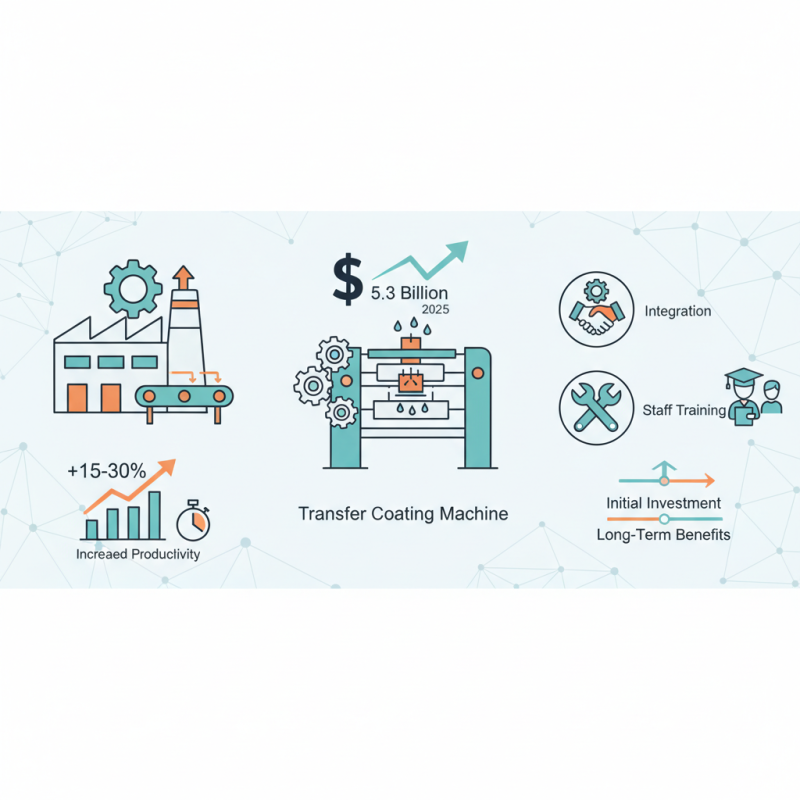
In today's highly competitive manufacturing landscape, the efficiency of production processes becomes paramount. The use of a Transfer Coating Machine can significantly enhance production capabilities. According to a report by Research and Markets, the global market for coating machinery is projected to reach $5.3 billion by 2025. This growth is driven by the increasing demand for advanced manufacturing technologies.
A Transfer Coating Machine is essential for automating the coating process. This machine ensures uniform application, minimizing waste. Companies investing in these technologies typically see a 15-30% increase in productivity. However, the initial investment can be daunting for some businesses. Careful consideration is needed regarding long-term benefits versus upfront costs.
Despite the advantages, not every company adopts this technology effectively. Some face challenges with integration and maintenance. Understanding the right application for a Transfer Coating Machine is crucial. Moreover, training staff is often overlooked but necessary for maximizing performance. As manufacturers aim to boost production, choosing the right equipment can be a game-changer.
Understanding Transfer Coating Machines and Their Importance
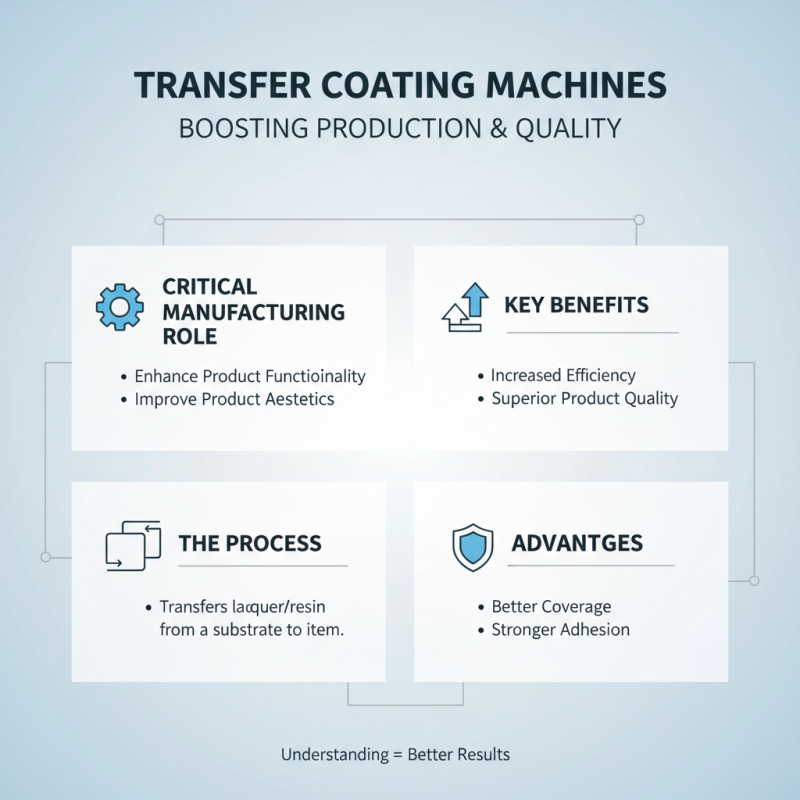
Transfer coating machines play a critical role in various manufacturing processes. They provide a way to apply coatings that enhance product functionality and aesthetics. Proper understanding of these machines can significantly boost production efficiency and product quality. The process involves transferring a lacquer or resin from a substrate to the item being coated, leading to better coverage and adherence.
Effective use of transfer coating machines requires attention. Maintenance is essential; neglecting it can lead to decreased performance. Check for wear and tear regularly. Operators should also be well-trained. Familiarity with machine settings can optimize production and minimize waste. Remember, even small adjustments can make a big difference.
An understanding of the limitations of transfer coating machines is crucial. Not all materials are compatible, which can lead to subpar results. Always test the finished product before large-scale application. This practice prevents costly mistakes and ensures quality. Overall, a balance between innovation and reliability is key for successful transfer coating operations.
Key Features to Look for in Transfer Coating Machines
When selecting transfer coating machines, understanding key features is essential for enhancing production efficiency. The first aspect to consider is the machine's precision. High-precision machines can reduce waste and ensure consistent quality. According to a study by the International Association for Surface Engineering, machines with precision capabilities of 0.01mm can improve output quality by up to 40%. This statistic highlights the importance of choosing equipment that can fine-tune coating thickness accurately.
Another critical feature is the speed of operation. Speed is a crucial factor in maintaining production flow. Recent reports indicate that transfer coating machines with a speed capability exceeding 100 meters per minute can significantly boost throughput. However, with higher speeds, some machines face challenges in maintaining coating uniformity. Users must balance speed with quality output. Additionally, energy efficiency is becoming increasingly important. Machines that are energy-efficient not only reduce operational costs but also contribute to sustainability.
Lastly, the versatility of the machine should not be overlooked. Many production environments require the ability to work with various materials. A machine capable of handling different substrates with ease is invaluable. Nonetheless, operators must consider whether complexity in versatility may lead to increased maintenance needs. This is a common reflection point within the industry. Overall, understanding these features can help businesses make informed decisions about their investment in transfer coating technology.
Top 10 Transfer Coating Machines to Boost Your Production - Key Features to Look for in Transfer Coating Machines
| Machine Model |
Max Production Speed (m²/h) |
Coating Width (mm) |
Power Consumption (kW) |
Control Type |
Key Feature |
| Model A |
250 |
1500 |
20 |
PLC |
High Precision |
| Model B |
320 |
1600 |
25 |
Touchscreen |
Auto Calibration |
| Model C |
280 |
1400 |
22 |
Manual |
Compact Design |
| Model D |
300 |
1550 |
23 |
PLC |
Energy Efficient |
| Model E |
350 |
1700 |
30 |
Touchscreen |
User-Friendly Interface |
| Model F |
330 |
1450 |
28 |
PLC |
Multi-Function |
| Model G |
360 |
1800 |
35 |
Touchscreen |
High Capacity |
| Model H |
290 |
1500 |
24 |
Manual |
Durable Components |
| Model I |
310 |
1650 |
26 |
PLC |
Quick Changeover |
| Model J |
370 |
1750 |
32 |
Touchscreen |
Versatile Usage |
Top 10 Transfer Coating Machines: An Overview
Transfer coating machines play a vital role in enhancing production efficiency. Their capacity to apply coatings accurately is unmatched. This technique can significantly improve product quality and durability. Companies seeking to optimize their processes should consider these machines seriously.
When selecting a transfer coating machine, pay close attention to the application speed. Machines with higher speeds can increase production but may compromise quality. It is important to find a balance. Additionally, user-friendliness is essential. Operators should easily understand the machine's functions. Complexity can lead to errors.
Regular maintenance is crucial for these machines. Neglecting this aspect can lead to costly downtimes. Consider setting a schedule for routine checks. Also, always keep an eye on the coating materials used. The wrong choice can affect both the application and the final product. Explore various materials to find the best fit for your needs.
Comparative Analysis of Leading Transfer Coating Brands
In the competitive landscape of manufacturing,
transfer coating machines play a pivotal role.
The efficiency of these machines directly impacts production rates and product quality.
According to a recent industry report, nearly 75%
of manufacturers cite improved productivity due to advanced transfer coating technology.
This emphasizes the importance of selecting the right machine.
Different brands offer varying features and performance levels.
Some machines focus on speed, while others prioritize precision.
Studies show that machines with automated controls can reduce labor costs by up to 30%.
However, this does not always translate to higher quality outputs.
Some users have reported inconsistencies
with specific automated processes, prompting discussions on reliability.
Moreover, the evolving market dynamics necessitate that manufacturers assess their needs carefully.
A survey indicated that 65% of users prefer machines that offer
flexibility for different applications.
This indicates a shift towards machines that can adapt to diverse coating materials.
Reflecting on these aspects, it's clear that the decision-making process for selecting transfer coating machines
requires thorough analysis and an understanding of each machine's capabilities.
Best Practices for Maximizing Efficiency with Transfer Coating Machines
Transfer coating machines are essential tools that enhance production efficiency. To maximize their effectiveness, consider key operational practices. Regular maintenance is crucial for consistent performance. Neglecting machine upkeep can lead to unexpected downtimes. Always inspect components. Even minor wear can disrupt production flow.
Implementing training programs for operators can significantly boost machine efficiency. Well-trained staff can quickly identify issues and optimize the machine’s settings. This decreases the chances of errors during production runs. Monitor operator performance closely. Observe if they follow established protocols.
A crucial tip is to invest in quality materials. Poor quality substrates can result in subpar coatings. This not only impacts the end product but can also strain the machine. Analyze the materials regularly and adjust as necessary. Efficiency is often a reflection of the input quality. Being attentive to these details can yield significant improvements in your production process.
Production Efficiency with Transfer Coating Machines